
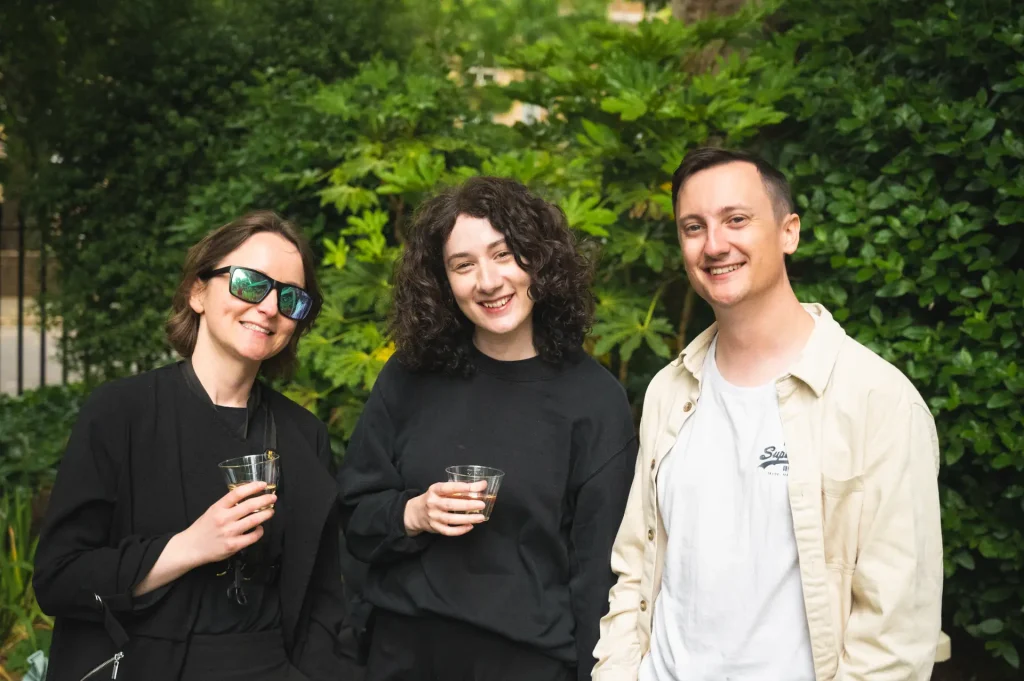
I’ve never met someone who didn’t look fantastic with a natural smile.
So why do so many people think they look terrible in photos?
It’s simple: they aren’t smiling naturally. The camera comes out, they suddenly feel awkward—which is what shows in the picture.
I don’t believe there’s such a thing as “naturally un-photogenic”. Being photogenic is a skill.
Yes, some people find it easier than others. But wherever you’re starting from, it can be learned.
Here’s the thing: pretty much everyone already knows how to smile for pictures.
What they actually need is to be able to stop freezing whenever the camera appears.
8 tips which will help you smile naturally for photos
Some of these smile techniques will help you later today if need be.
Others might take a bit of practice.
But the theme running through them all is this: you’re trying to put yourself in the state of mind where you’re relaxed, and acting as if you do not have a camera pointed at you.
Tip #1: Start with a smaller smile
You don’t need to go into a full-width grin right from the word go.
If you do, it might look like you’re overcompensating. It doesn’t mean photos of people smiling very broadly can’t be sweet, but it does often mean they still look awkward and unnatural.
Have a think about how this usually works. People don’t often see something/someone and immediately burst into their biggest smile. Even when they do, that’s probably not the face they want captured in a photo, so it’s worth avoiding this reflex when you see a camera, too.
Start small and give yourself room to develop naturally.
Tip #2: Don’t “hold a smile”
Then, once you are smiling, don’t simply freeze your smile muscles.
Sometimes, if you’re in the middle of an enjoyable conversation or watching a great show, you might hold a smile for a while. But it’s more typical that we smile occasionally, then it fades away, even if it’s not long before it comes back.
If you’re in a really great mood, then by all means, keep going! That’s really fantastic. What I’m advising against is locking your face in a position which will just end up looking unnatural/forced.
You’re trying to mimic how you’d be when you smile naturally.
You are NOT trying to “perform happiness” harder.
Tip #3: Loosen your shoulders/jaw
This is one of the best tips for anyone who suddenly seizes up at the sight of a camera.
If you look awkward in photos, you’re probably quite tense without realising. Drop your shoulders and relax your jaw. Take a moment to compose yourself if need be. You’ll be astonished at how much your face unclenches when your upper body relaxes.
Here are some other things to this effect:
- Avoid folding your arms if it makes you feel closed off.
- Take a deep breath, then breathe out slowly.
- Relax your tongue instead of pressing it to the roof of your mouth.
- Shake your arms out if you’re feeling stiff.
- Give yourself permission to look a bit silly for a minute while you’re settling down.
Tip #4: Don’t smile; react!
A duck walks into a drug store and says, ‘Give me some Chapstick, and put it on my bill!’
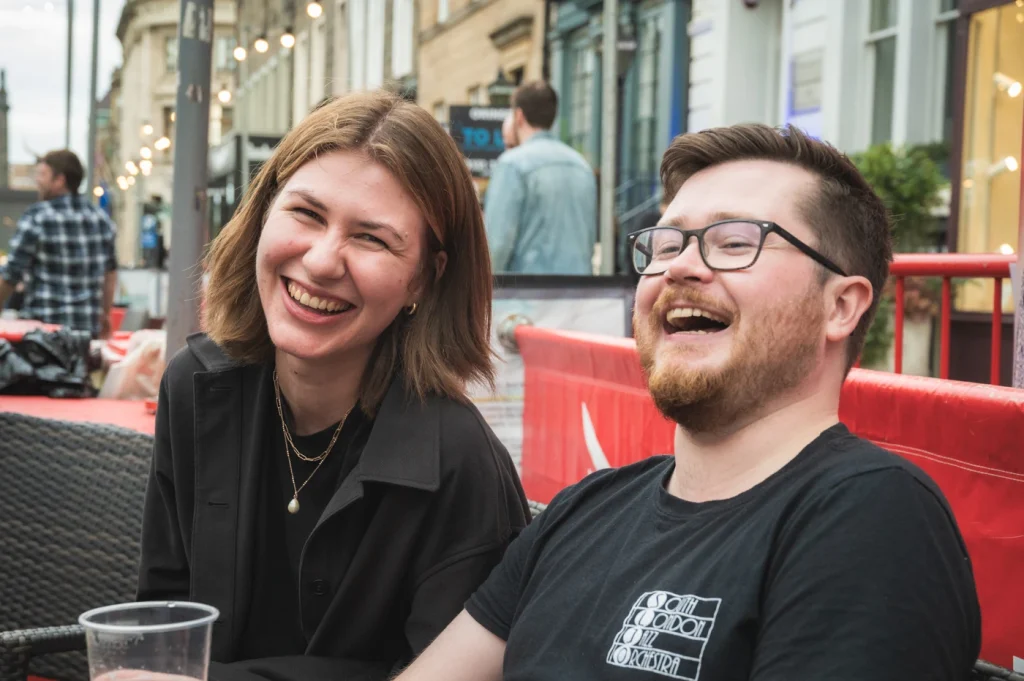
Laughter creates one of the best smiles in anyone.
If you’re in a group, it’s honestly worth putting the camera(s) down and just bantering for a bit. When everyone’s having fun and has shaken off any nerves, go back to taking pics while the moods are high.
If you’re on your own, think of your best joke. Or, read the duck joke just above again. Now, imagine a friend telling you that joke, or an equally silly one. Maybe you get a scoff-smile, or a decent fake laugh.
The key here is to get a feel for how your face changes when you’re reacting happily, and what smile muscles you’re engaging when it happens.
Tip #5: Look away, then come back to the camera
This one’s similar to point #2: staring down a camera lens tends to make people freeze up.
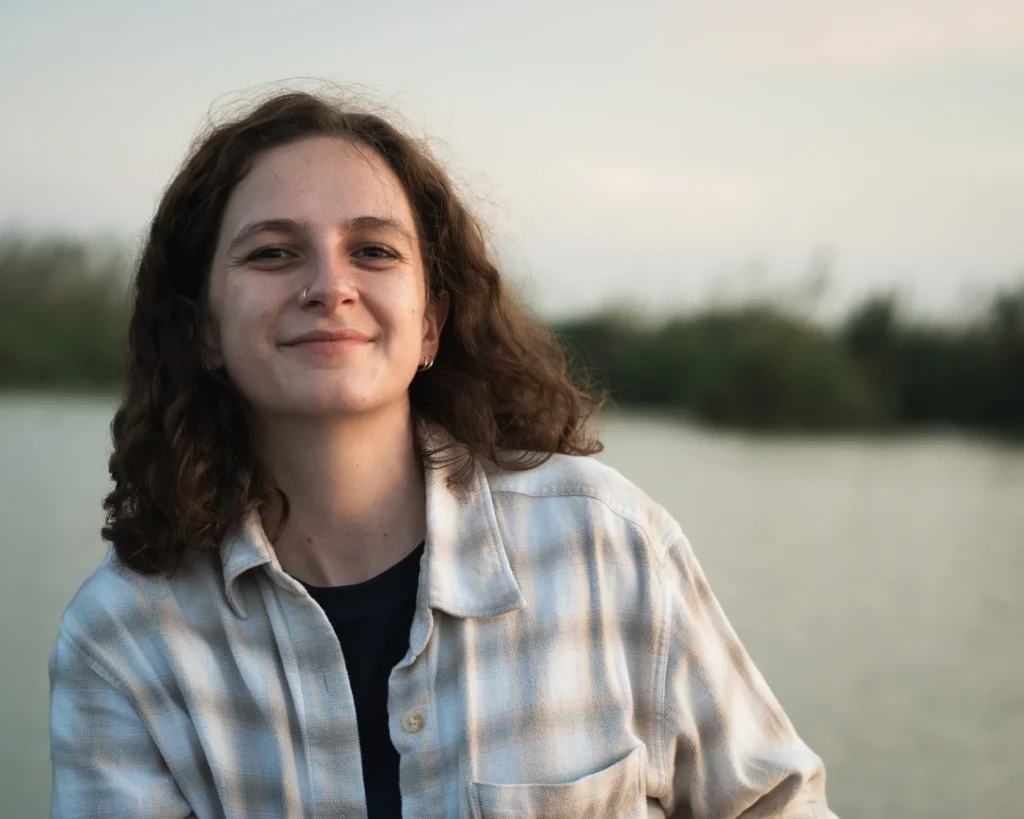
Try looking away from the camera for a bit. Think happy thoughts, or perhaps just about anything other than your own face. When you’re feeling a little more at ease, look back and shoot the camera/photographer a small smile as if you had just noticed a friend.
Take your time with this one. You don’t have to look back and immediately snap into a smile. Let it form as it will.
Tip #6: Smile with your eyes, but don’t overdo it
Or…”smize”.
Many smiles look forced because the mouth changes shape but the rest of the face stays frozen. Engaging your eyes while you’re smiling helps it feel much more natural.
Practice doing the “soft eye squint” which softens your face slightly, but doesn’t become a full-blown squint that looks like you’ve just spotted someone you owe money to.
Tip #7: Use movement between shots
Standing still and waiting for judgement to come is a terrible emotional environment for a natural smile.
Small movements like walking, turning towards a camera, and even adjusting your jacket or holding a coffee help break you out of the “I don’t know what I’m meant to do” spell.
As has been true for a few other tips in this list, this one is to help you get out of your head—and to help prevent the instinct that makes you want to freeze up.
Tip #8: Give it time
A friend of mine, a very skilled photographer himself, once told me: “When you’re photographing parties, just get right in people’s faces. They feel awkward as hell at first. The first half hour you’re there, the photos will be completely unusable.”
He chuckled before continuing. “But after that, they stop giving a sh*t. And THAT’S when you get the really good photos.”
The moment you get told to stand somewhere and do something by a photographer, you’ll probably tense up. But honestly, sometimes all you need to unclench a bit is to allow a bit of time to adapt to a situation.
The thing you must NOT do is, take a few awkward pictures, think you look terrible, then give up.
Always give it an honest chance. And if things still aren’t working? Take a break. It’s fine to come back to it later.
Why trying to smile in photos feels awkward
My start in portrait photography was drifting around parties, taking photos of people who were too busy socialising to realise I was there.
The pics I got of people laughing and socialising were some of my best work.
Then often, people would notice me pointing a camera lens at them. While a few did ignore it, many would roll their eyes, pull a face or just make it clear they wished I was pointing the camera somewhere else.
I can promise you this: it’s not because they disliked me. From the comments I got after I published each collection, I know full well they loved having nice pictures of themselves.
It’s because the moment they noticed they were being photographed, they wouldn’t know how to act.
Dig deep. Do any of these thoughts feel at all familiar?
- “Smiling for the camera is too cringy.”
- “I don’t know what I’d be doing if there wasn’t a camera pointed at me.”
- “I don’t know how to look nice, so I’m just going to pull a face instead.”
- “I’m worried I look terrible, and my shame will be immortalised in a photo for all to see.”
Smiling isn’t cringy, you don’t look terrible, and I can promise pulling a face doesn’t help. And you can act perfectly natural without a camera; it’s just a case of figuring out how to do the same when there is one.
And therein lies the secret: you have to stop caring about the camera.
Easier said than done. But, as I’ve mentioned before, practice, create an environment where you’d be smiling anyway, then take your time with it.


Can you learn to be more photogenic?
Yes, you can!
When I began in photography, my mentor asked our class a simple question.
“What do you think ‘photogenic’ means?”
All the obvious answers came out. “Someone who looks great in photos!” “Someone who knows how to smile in photos properly!” “Someone whose 3D face translates well to 2D pixels!”
He took a few more answers, all to the same effect. Then, he simply said, “No.”
“It has nothing to do with your face, the camera or the photo. It’s purely in the attitude. Someone who’s ‘photogenic’ is someone who has a great attitude when a camera is pointed at them.”
I’ve been taking portraits for over a decade. And years after my mentor gave me that advice, I can say he was absolutely correct.
And whilst it’s not as easy as, “All I need is a new attitude, then!”, a little “smile practice” a few times a week can work wonders.
Practice makes perfect…but don’t rehearse yourself into a hostage video
Try some of these in front of the mirror, and/or with a selfie cam:
- Experimenting with small smiles, big smiles, and everything in between. Learn what “too much” feels like.
- Being conscious of when you clench your jaw/shoulders or anything else
- Seeing what happens when you look away, think about something else briefly, then look back
Then, here are some tips which work over a longer period of time.
- Whenever you’re out and about, try to catch yourself when you smile or laugh. See which smile muscles are engaged, and by how much.
- Get more people to take pictures of you! The more you get used to a camera pointing at you, the less you’ll care over time.
You don’t have to do this relentlessly in public. But in places or events where you wish more photos existed of you anyway, others are probably thinking the same. If anything, they’ll respect you for it.
What NOT to do
…and here’s a list of things to avoid:
- Spending a few hours engineering the perfect expression
- Trying to memorise how to wear a specific smile
- Obsessing over any imperfections in your face
You aren’t trying to memorise a single expression. You’re just getting an idea of how your face jumps into a smile naturally.
What a professional can do for you
You might have noticed not many of these tips are directly about smiling.
They’re about getting out of your own head, and that’s why a great photographer’s job isn’t just to press the shutter button. They’ll help you create an environment where you stop worrying about the camera in the first place.
A professional photographer can help by:
- giving you something to do, so don’t stand still wondering what to do with your hands
- keeping a conversation going to keep you out of your head
- using movements and prompts instead of expecting you to invent poses from scratch
- helping you relax if you’re nervous, and
- recognising when you’ve settled into a shoot and are starting to look more natural
Usually, the best photos happen after you’ve forgotten you’re meant to be posing at all.
So, if you’re struggling to take great photos, don’t assume the answer is to become naturally confident overnight.
Sometimes, the answer is to work with someone who knows how to guide you through the process!
And, if you need photos for LinkedIn, dating apps, social media or your website, I offer relaxed portrait photography in London designed specifically for people who don’t think they’re photogenic.
In either case, best of luck with your photos!

Written by Tommy McDevitt
Tommy is a London-based portrait photographer, marketer, engineer and musician. His work focuses on relaxed portraits, useful photos and documentary-style photo essays, with a practical eye for how images are seen, shared and used.
Frequently Asked Questions
Why do I struggle to smile in photos?
Most of the time, you aren’t thinking about how your face looks.
The moment you try to smile in pictures, you become painfully conscious of how your face appears. Instead of being natural, you start trying to “perform a smile” (if you try to smile at all). Your face tenses up, you lock your shoulders and stare down the barrel waiting for photographic judgement.
The problem isn’t your smile; it’s the pressure of being photographed.
The solution is to stop treating a smile like a pose you need to hold. Create the conditions under which you’d be smiling anyway, and the smile you catch on camera will be natural and not awkward.
Is being photogenic the same as being attractive?
No, being photogenic and being attractive aren’t the same thing. Even for people who are very conventionally attractive, they might feel that photos don’t do them justice.
Especially for people who are confident/charismatic as well as attractive, you might expect they’d look fantastic in photos. But, like anyone else, sometimes they freeze up or feel very awkward the moment a picture is being taken.
By contrast, someone who feels relaxed and comfortable in front of a camera will photograph well, irrespective of how attractive they are.
This is why I think “photogenic” is much more a skill/attitude than a trait. Some people have it naturally, others pick it up over time. But absolutely everyone can improve at it.
Why do I look worse in photos than in the mirror?
You don’t. It’s all perception.
In the mirror, you see a 3D, reversed version of your face. In photos, you see it flipped the way other people see it, frozen at an unfamiliar angle with lens distortion, lighting and expression all playing a part.
This is why a photo can “feel wrong”, where if you were to ask someone else to take a look, they wouldn’t know what you mean. If you’ve ever taken a photo of someone who said, “I look awful!” where you thought they looked decent, it’s the same effect in action.